VIDEO LESSONS · LESSON 4 OF 6 · WATCH · 10 MIN
Egregores Explained: The Things You Feed Every Day
Egregore is the old word for a pattern a group keeps alive with its attention. This lesson shows what one is in this school's books, how one forms, and how to see which ones your attention feeds.
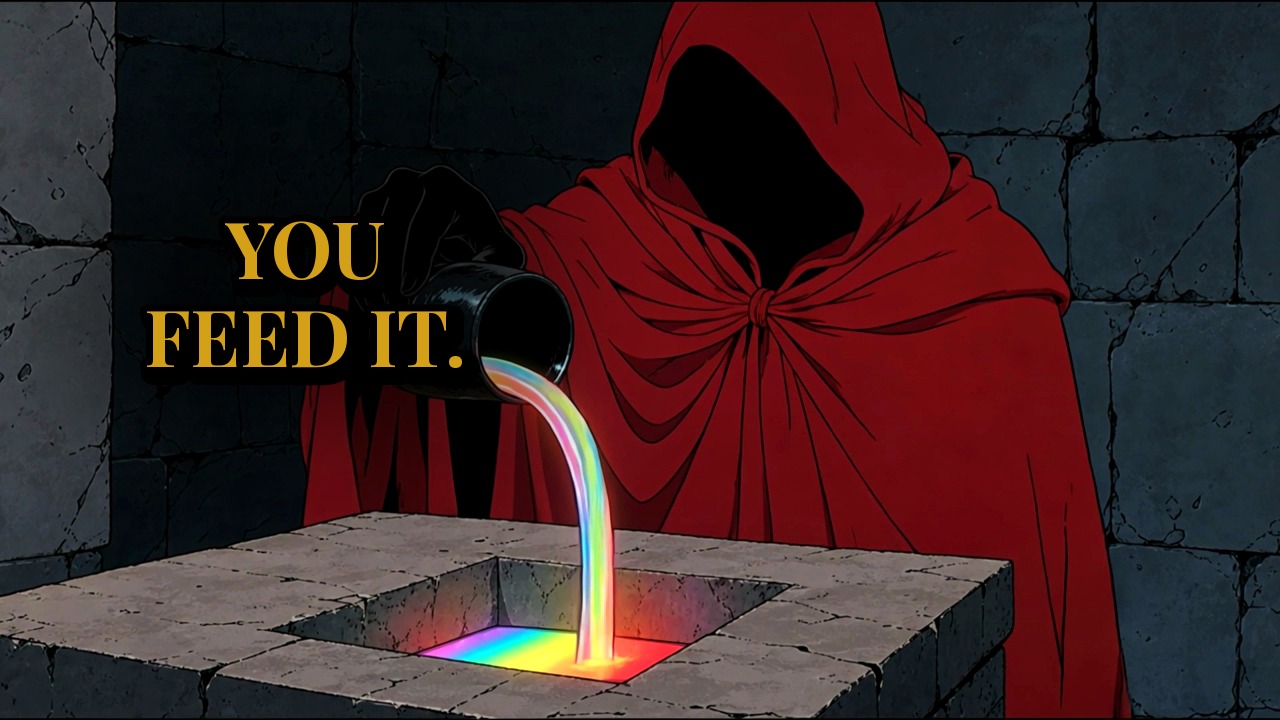
The video loads from YouTube only when you press play. Open on YouTube
This lesson is about where your attention goes when you are not steering it. The old magicians had a word for the thing it feeds. Egregore.
They kept seeing the same thing in groups. When people hold one symbol together, with feeling, for long enough, something forms that none of them owns. One member can walk away, and it stays.
This school keeps the word and drops the theater. No robes and no spirits. In this teaching the thing has no awareness the way a person has. It has structure, it lasts, and it shapes the people who feed it. Test that against your own week.
What an egregore is
The books give a plain definition. An egregore is a pattern in the shared field that has collected enough attention to keep itself going.
No single person keeps it alive. It feeds on the attention of the group, and the group leans on its shape. Each one organizes the other.
It is not a ghost and it is not a god. In the language of the books, it is liquid light made thick by shared attention until it holds its own shape.
The recipe is short. Symbol, plus word, plus charge, plus repetition, plus a group focusing together. Keep it in mind, because you will start to see it in many places.
“It feeds on the attention of the group. The group feeds on the egregore's structure.”
The Word as the Wand
How one forms
The books lay out the steps. First, one person holds one idea with real certainty.
Second, they put it outside themselves. A name, a symbol, a story, or a sentence other people can repeat. Third, other people pick it up and carry it. They wear it, say it and defend it.
Fourth, enough people hold the same idea with enough feeling, and it tips. It stops needing the person who started it. Fifth, it carries itself. The group feeds it, and it shapes the group.
A religion shows the recipe. The beliefs differ from one to the next, but each has its symbol and its words, said together with feeling. A company shows it too, with a logo, a mission sentence and meetings that run like rituals.
In the books it still does not think. It runs on attention. When the attention stops, it fades.
“The religion no longer needs its founder. It no longer needs its original charismatic leader.”
The Word as the Wand
The ones you feed by default
By this definition, a team you cheer for is an egregore. So is the place you work, a fandom, and a brand you feel loyal to for no reason you can name.
The feed is one as well. The book DEVIL calls social media the envy engine. It shows you the best moments of other people, you compare, and it learns what charges you so it can serve more.
Your family is the first group you were part of. It had a name, phrases everyone repeated, and rituals that came back each year. The books call that default programming, put in before you could choose.
There are a few signs that you feed one without choosing. You feel attacked when someone criticizes a side you did not build. You repeat its phrases without noticing. You feel a pull to check on it when nothing is happening.
None of this makes you weak. Groups are how humans survive. The only question is whether you joined on purpose.
“The adept examines every desire and asks: Is this mine, or was this installed?”
MAGUS: The Ontology of One
The audit, and the healthy kind
A magician cares about this because attention is the raw material of every working. If most of yours is already spoken for, little is left for what you choose.
So the working starts with an audit. For seven days, write a line each time you catch yourself giving charge to something bigger than you. Note the symbol that caught you and what you felt.
Not every egregore is a problem. A family that eats dinner together builds one. A practice group that meets each week and keeps records is one. Ask three things of each name on your list. Did you choose it? Can you question it? Does it give back?
A no is not an order to leave. It is a line in your record. The audit is for seeing, not for blaming anyone.
If you later start a small one on purpose, keep it honest. Write down what would count as a result and by when, keep a session record, and judge it by the record. A working that shows nothing is still data.
“These are the active workings. They are producing results.”
MAGICK: The Operations Manual
Words used here
- Egregore
- A pattern in the shared field that a group keeps going with its attention. In this school it has structure, not awareness.
- Charge
- The feeling you put into a symbol or a word. Anger, excitement and envy all count as charge.
- Default programming
- The habits, phrases and wants that family and culture put in before you could choose them.
- Audit
- A plain record of where your attention goes, kept so you can see it, not so you can judge it.
THE WORKING · TONIGHT
Five minutes on paper.
- Keep a short list for seven days.
- Each time you catch yourself giving charge to a team, a side, a brand, a creator or a feed, write it down.
- Next to each line, write the symbol that caught you and what you felt.
- At the end of the week, ask the three questions of each name. Did you choose it, can you question it, does it give back?
Count the lines at the end of the seven days and write down which names came up most.
Questions to sit with
- Which group gets your charge most often when you are not choosing?
- Which phrase from your family do you still repeat?
- Which of the names on your list did you join on purpose?
The quoted lines come from the MAGUS books named under each one. Test it in your own life. Keep what holds.
Your marks stay in this browser only. Nothing is sent to us.
Next.
Every egregore in this lesson starts with a symbol. The next lesson shows how a mark gets its pull, and how to make one for an idea you picked.
The free book is MAGICK, An Introduction.